Friday, April 19, 2013

RPG Stuff: Song of Ice and Fire (Reprise)

Last year, I had managed to put together a gaming group that met semi-regularly and played RPGs. We did a lot of different stuff: Mutants & Masterminds was a favourite, having quite a number of different sessions; Rippers, a setting for Savage Worlds, was a one-off thing that one of the others ran; I even tried running a campaign with a homebrew system though, unfortunately, it did not pan out quite how I wanted it to. We'd also considered running campaigns using the Serenity system (to feed our inner Browncoats), War of the Rings (to companion the return of Middle-Earth with The Hobbit) and even running a game using the world of Mass Effect (something that Nick and myself are still working on).

Of all of the games that we played, however, I think the one that was regarded the highest was our Song of Ice and Fire campaign. I spent quite a bit of time crafting an elaborate story with intrigue and violence, as the Game of Thrones setting demanded, and with all of us enjoying the TV show, it seemed the perfect companion to explore the world of Westeros. Not only that but, given the structure of the system, everybody was able to be involved in creating our own house, thus staking our claim in the world as if we were living through the HBO series ourselves

So it was that House Ashborne came to be. The house lands are far to the northwest, near the mouth of the Last River, and feature a great wooded area and a marsh that separates the Hall of Ashborne from the sea to the west. Lord Lennox Ashborne was raised to his station for his valiant acts during Robert's Rebellion and was awarded the lands of a lord of the North who had remained loyal to the Targaryens. The lord in question had fallen in a battle against the forces of House Mormont and left no living heirs to inherit the land; as such, Lord Stark bestowed it upon Ser Lennox Ashborne as thanks for his duty in the Rebellion. House Ashborne has only been around for sixteen years to this point so they are yet young and unproven in the kingdom of Westeros, though they did assist the North against the Iron Islands during the Greyjoy Rebellion.

For the game, Lord Lennox, remained an NPC, in order to help give guidance to the players should they become lost, but many of the other house members were fleshed out:
  • Master Acanthus Ashborne, heir to House Ashborne, was born to Lennox Ashborne when he was still a Ser. The only son of Lord Ashborne, his mother died in childbirth, leaving Acanthus to be raised by his father (and now his stepmother). This character belongs to Dallas.
  • Lady Aralia Ashborne, nee Farman, was wed to Lord Ashborne only a few years after the Rebellion. Wanting to strengthen ties between the Westerlands and the North, the marriage was arranged but has proved beneficial to both families (and sparked a loving relationship between the Lord and Lady). This character belongs to Kait.
  • Solomon Sayt, assistant and servant to Master Acanthus, serves as the head of the servants in House Ashborne. Though he does not contribute as much to business matters as a steward, he has been tasked with arranging meals and making sure that all the servants are kept in line while also attending to Master Acanthus' every need. This character belongs to Nick.
  • Shy is a servant with a mysterious past; she appeared only recently to House Ashborne and has already made her way into the service of Lady Ashborne. She is a schemer, however, and often has many plots on the go at once. This character belongs to Kristi.
  • Emilja Kotar is a sworn sword who serves as part of the personal guard to the Ashborne's. She is a deaf-mute so she has some difficultly communicating with others but is a crack shot with a bow and has proven herself an able warrior. This character belongs to Kurtis.
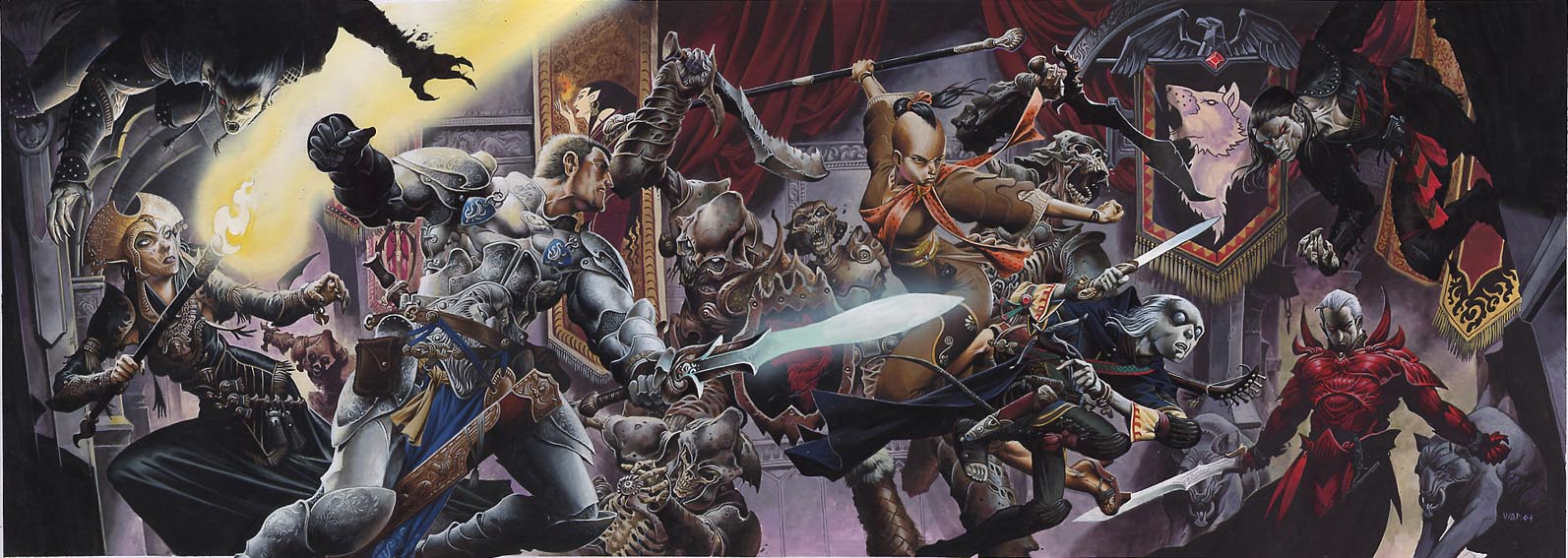
I really like the artwork that they included
for this book. It's really fitting for the setting!
Though a few other characters presented themselves along the way as people dropped into the game (Ser Simeon Dax who serves as Master-of-Horse for House Ashborne, and a caravan trader [whose name escapes me] who sets out from and returns to House Ashborne quite frequently), these five seemed to be the core group of characters. As the campaign ran, they all shone at different times -- Lady Aralia was a silver-tongued master of intrigue, Emilja proved a valiant and stubborn warrior, Shy schemed her schemes, Acanthus helped his father run the house, and Solomon... got drunk? -- but all contributed to the story in meaningful ways. (Yes, even Solomon getting drunk.)

The reason I bring this campaign up? We have decided to reconvene and start the adventure again! It has been some time since we last got together, however, so I figured it would be good to give everyone a refresher on what has happened thus far:
House Ashborne was waiting the arrival of a caravan from House Farman, far to the south. Ser Philander, brother to Lady Aralia, was on a trip to the Wall and decided to stop to see his sister. It was also suspected that the Farman's would be looking to renegotiate the trade agreements they had with House Ashborne; in any event, the house stood ready to receive their guests.
Some days prior to the expected arrival of Ser Philander and his convoy, an old friend of Lord Ashborne arrived seeking sanctuary. Gunnar of Deepwood Motte -- known as the Fly in King's Landing -- was an information broker of sorts who had stumbled across some awful secret that he believed threatened his very life. Retreating from King's Landing, he sought out his old friend Lennox, hoping the newly-appointed Lord would be able to save him from harm. Though Gunnar would not share his secrets, Lord Ashborne agreed to keep his friend safe and made arrangements for him to be escorted north to House Silt, a banner house that had sworn fealty to House Ashborne. 
Of course, as fate would decree, Ser Philander and his convoy arrived much earlier than expected, leaving Gunnar and the Ashborne's in a sticky situation. Solomon and Emilja were tasked with protecting and escorting Gunnar from the Hall of Ashborne north but were first expected to hide Gunnar while the Farman convoy was dealt with. Instead, Solomon and got Gunnar drunk in an effort to discover the secrets he held, all the while getting more and more intoxicated himself. Emilja merely watched in amusement and curiosity.
The Ashborne's met the Farman convoy and made arrangements for Philander and his noble comrades (Ser Bo Yarwyck and Ser Lorent Lorch) to stay within the Hall of Ashborne, while the guards that escorted them were put up in a local tavern in the town of Howlminster nearby. A meal was had and the knights made themselves comfortable as the Ashborne's distracted them from the presence of Gunnar. Ser Philander suggested a hunt on the morrow, to which most agreed.
Ser Trevor Upton, Master-at-Arms for House Ashborne, discovered the drunken state of Gunnar and Solomon and berated Emilja for not taking better care of their honored guest. Taking the task upon himself, he relieved Solomon and dragged Emilja along for the escort of Gunnar to House Silt. They waited until the members on the hunt departed before leaving the grounds of House Ashborne. On the way, however, they were ambushed by bandits; Emilja managed to escape but she left Ser Upton behind as he valiantly stood against the bandits.
As a feast was being arranged from the game the hunt provided, Emilja arrived back at the Hall of Ashborne, severely injured and unconscious, on the back of her steed. There was no sign of Gunnar nor Ser Upton and now Ser Philander and his comrades had been made aware of some manner of emergency within House Ashborne. Lady Ashborne decided it safe to confide in her brother and asked his assistance (and discretion) with this matter.
Where will the story will pick up? Emilja has been treated for her injuries and is back on her feet, though weakly. Lord Lennox, Master Acanthus and Lady Aralia will be meeting with Ser Philander and his knightly companions, ready to discuss what course of action they should take to rescue Ser Upton. Solomon is busy sobering up and trying to assist Master Acanthus with his preparations, while Shy busies herself with her schemes and trying to assist Emilja.
We plan on getting together next Thursday, so stay tuned next week for a quick debrief about the session and what transpired for House Ashborne!

Malifaux: Battle Night!

This past weekend I went and joined the occasional Malifaux night that Josh throws at his house. With his entire basement converted into a gaming center (complete with four 3'x3' tables full of terrain), it gives a great location for multiple people to get together and play games. I had been present to two of these nights previous: the first time was a fairly busy night, with about six people total in attendance the first night and just Darren, Josh and I the second. This night, however, had the basement crammed full with ten people!

The first round of games (only) had seven people in attendance, so we decided to break into three groups: two 1v1 games and one three-person free-for-all. We flipped cards to determine our partners (two lowest and two highest together, the rest for the three-person game) and I was matched up with a fellow named Curtis. I had been talking to him before the games started and found out that he collected Guild almost exclusively and that he did not play very often with the guys, but enjoyed coming out every once in a while for the company and good times. He was very self-deprecating about his skill with Malifaux, ensuring me he barely understood the rules, to which I laughed and told him this would be only my second game so I couldn't be much better off. With that, we both consulted our rule books and got started.

(I also apologize in advance for the lack of pictures; my phone died midway through the night so I couldn't record any evidence of the games. Next time, I'm going to take an actual camera and do things right! Promise!)


Friday, April 12, 2013

Classic Blogging: Returning to the Battlefield

You know what I haven't talked about in a while? Video games.

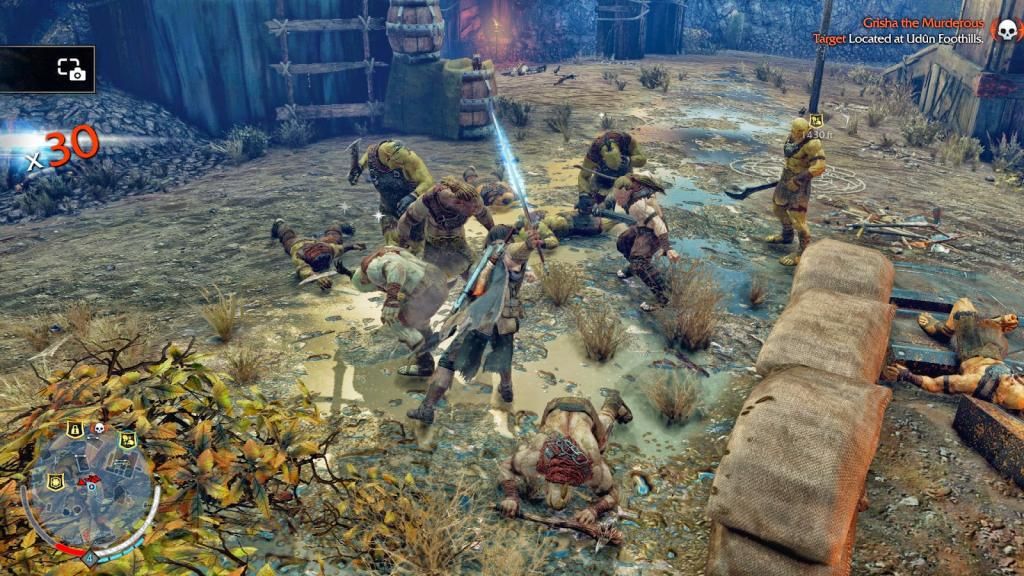
Lately, I've found myself playing a lot of Battlefield 3, actually. It's been a long time since I sat down at my computer and booted that game up but it's a whole lot of fun. It was rough getting started again; I was level 21 in the game last I had played and consistently did very well when playing. I had received the Ace Squad award quite a number of times and even managed to be the top player in the game once or twice. I found that I did well because, unlike Call of Duty which always boils down to Kill/Death ratios, Battlefield rewarded you for performing objectives -- something I always hold in higher regard than K/D. Thus I would be tactical and play defensively for a while, defending a point from capture, and earn quite a number of points before spearheading a push to an enemy strongpoint and take it for my team.

Having played Call of Duty lately with my buddy Dallas, however, left me with the impression that all FPS games revolve around twitch reactions and Kill/Death ratios. Thus, when I booted up Battlefield 3 again (thanks to prompting from Dallas, who had received a free copy with his purchase of SimCity), I found myself lost in the entire scope of the game. Where Call of Duty has tightly designed maps full of death corridors and methods of instant-death, Battlefield is grand and open and allows for all sorts of variation. Where CoD punishes you for every mistake you make, Battlefield is forgiving enough to at least allow you a chance to retaliate -- permitting you act fast enough.

Getting back into things was slow. My account was up to level 21 when I started again but I found myself relearning everything about the game. Some things -- map layouts, vehicle controls, destructible environments -- came back very quickly while others -- bullet trajectory, squad commands, knife controls -- are still a point of contention for me. But, after the initial frustrations, I found myself slipping back into the game that I loved so dearly back in 2011.

Though I had leveled to 21 almost entirely using the Engineer and Assault classes, I decided to switch things up and start working on the Support and Recon classes instead. I find that I am (relatively) awful with sniper rifles but I would like to keep working on it, in an effort to unlock the laser designator. Support, on the other hand, has given me a new insight into the game; where Engineer and Assault classes end up being very hit-and-run with their tactics, trying to deal with a single armour unit or a small group of soldiers, a single Support can hold an entire objective to themselves (until aforementioned armour arrives). I know because I managed to do so in a recent game; I found a secluded spot in which to set up my bipod-equipped LMG, utilized the great field of vision I had and managed to hold the point against consecutive waves of infantry.

I still like the Engineer and Assault class, however, and each situation calls for different tactics. On some maps, it is easier to hold some points as an Engineer rather than a Support, and sometimes my customized Assault class (with shotgun and smoke grenades instead of assault rifle and medpack) is just the point man our team needs to take an objective.

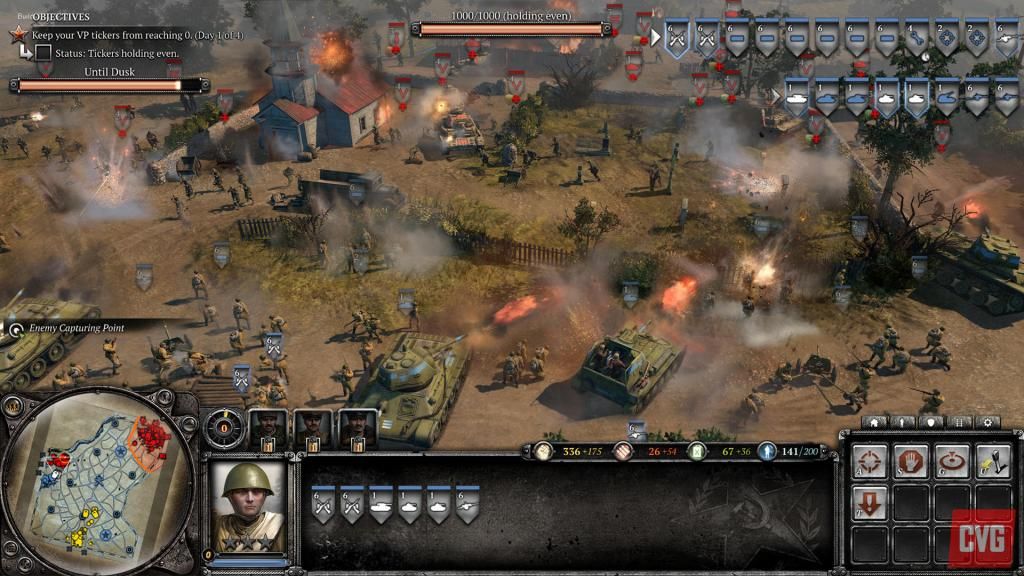
This frame definitely looks scripted but I wouldn't be surprised if it happened
organically in the course of a match. BF3 is just that kind of game.
I have managed to reach level 22 now, after a handful of matches, and am eager to continue progressing once again. Even despite my love for the design, however, there are still issues with Battlefield 3 that have yet to be fixed. For starters, it is still entirely possible for games to devolve into what the community has coined "baserape"; effectively, one team push the other back to their starting spawn area and refuse them from leaving the base before dying horribly. I have been on both sides of this situation and in neither case is it much fun: when you are the team being pushed, you experience such utter frustration at the game (not the players) it is almost beyond comprehension; when you are the team pushing, the game becomes little more than a clock-watching exercise as you protect an objective that you know your opponents will never take.

The other issue with Battlefield 3 -- and, really, it is an issue with most competitive PC games -- is the frequency of cheaters. Now, admittedly, I have not seen very many in my days playing Battlefield 3. That being said, when a cheater is present, it is so very obvious and so game-breaking that it boggles the mind to think how anybody could have fun doing so. Using aimbots or other similar cheat programs creates an entirely frustrating experience for everyone else involved, including the people on your team. In effect, aimbots turn a game of tactics and strategy into little more than a contest to see how fast you can click your mouse. How is that fun?

To finish out my little blurb about Battlefield and cheaters, let me regale you with a tale of a recent match: I had joined this particular server about midway through a match. Immediately, I noticed that chatbox was filled with all sorts of complaints about this one particular player (on my team) who was cheating. Finally, I asked the other team who was the culprit. They gave me a name, and I checked the Scoreboard to see what the fuss was about. The player in question -- gamer tag: Hameedie -- had racked himself a kill/death ratio of something like 61/6. I considered the ratio -- a little over 10-1 -- and thought: "That's a little high, but maybe he's just really good. Whatever, no big deal." The game continued, the other team still complaining, and the match ended shortly thereafter.

The next map loaded and I was once again on the same team as Hameedie. Not five minutes into the match, people began to complain about this player cheating once again. They were consistently -- frantically -- calling out for a server admin to do something, to no avail. As I played, I checked the scoreboard periodically and watched as Hameedie jumped to a 91/2 kill/death ratio in less than fifteen minutes. No longer able to rationalize such a score (a 45/1 ratio based on pure skill? Not bloody likely), I decided enough was enough and went in search of this cheater.

This doesn't really have anything to do with the story but
this game always looks so amazing, so here's a pretty picture.
As I came upon Hameedie, I watched as he fired three shots and was granted two kills, back-to-back. The targets couldn't have been closer than an in-game kilometer and Hameedie was merely using an LMG but the kills still registered and his score still climbed. The only way that was possible was if he had hit with headshots which, at that range, simply was not possible. At the time, I was carrying my own LMG, so I opened fire at his position. Disappointingly, it didn't have much effect, nor did standing in front of him and trying to block his line of sight.

After an enemy tank managed to flatten us both, I switched to Assault (for the smoke grenades) and joined his squad, waiting for him to spawn. When he did, and he returned to his same routine, I popped smoke grenades at his feet, fired all of my bullets into him and even tossed regular grenades to make him scatter. Eventually, I had nothing left to use against him, so I knifed him once in frustration.

Suddenly, his character model jerked quite visibly, as if the knife had impacted him far greater than any of the bullets had. Curious, I knifed him again; same reaction. Gleefully, I equipped my knife and began to slash frantically at him, causing his model to jerk this way and that; he simply could not deal with the recoil the knife forced. Finally, after a few minutes of very persistent knifing, Hameedie stepped away from the top of the cliff, looked at me, froze in place, and typed into the chat window: "Dude, what the hell is your problem?" And then promptly logged off the server.

I felt a sense of overwhelming joy and pride. I used the chat window to declare to everybody present that I had managed to rid the server of the cheater, and was met with a (admittedly small) chorus of approval. The game continued and my team eventually won but it was a much more even contest, thanks to the lack of a cheating presence to imbalance the teams. Hameedie's final message stuck with me a little, but only because of the unintentional irony behind his statement: someone cheating, effectively breaking the game, asks someone standing up to him what their problem is? I laughed at the irony, and still do.

My only regret from that entire situation was that I didn't load Fraps, record evidence of the cheating and post it on YouTube, as I had seen others do before. If I ever see Hameedie (or any other cheaters, for that matter), I will endeavour to be much more diligent and make sure DICE hears of the cheating so they can take disciplinary measures. Sure, they might be busy developing Battlefield 4 (which I am suddenly very excited for) but I'm sure they would be interested to hear of any wrongdoing in their games.

Long story short? Cheaters suck, Battlefield 3 rocks, objective-based shooters are much better than purely deathmatch games and I missed this game a lot. I'm glad I'm getting back into it now!

Wednesday, April 10, 2013

Ravenloft: The Five

Welcome back to the continuing saga as I discuss the process of creating a campaign for my RPG group. As this adventure will be a revisit to a campaign where I ran the published adventure, Expedition to Castle Ravenloft, last time I discussed what had changed in Barovia since the original campaign ended. This time, I plan on expanding on a topic I touched on very briefly: in Barovia, there are a group of primordial powers that hold power over the very land, having kept the influence of the gods far away from this land of dread. I will discuss where they came from and what part they may play in the course of the upcoming campaign.

(Unlike previous entries to this series, this article will only have very minor spoilers about the Expedition to Castle Ravenloft adventure and any spoilers that are present will only really affect the group with which I am playing. If there are any prospective GMs or Players for the Castle Ravenloft campaign, feel free to read ahead.)

How 'The Five' Came to Be

Throughout the course of the original campaign, I ran into an issue: during one of the earliest encounters the party had with Strahd, one of the players attacked the vampire. Though this was not to be unexpected, what was surprising was that the player rolled high enough to completely vaporize the vampire lord in a single shot. Obviously, I did not let this action take full effect; I allowed the attack to somewhat effect Strahd, to the point where the player felt they had actually proven themselves, but I was forced to reevaluate a few things because of the interaction. 

Firstly, on a broader note, the experience taught me the importance of narrative and dramatic intercession. What I mean by that is that sometimes, as the storyteller, it is more important to preserve the story (and the sense of drama) by interceding when necessary. If I had let the player kill Strahd so early, they would have felt very accomplished but the entire remainder of the story would have been abandoned and the entire endeavour would have been a waste. Moving forward from that experience, I have striven to provide reasonable explanations for why a specific course of action may not succeed and always offer alternatives so that the players do not feel cheated. Which brings me to the second point:

Because I had interceded and performed some deus ex machina to save my main villain, I was forced to provide a reasonable explanation for why the players could not so brazenly attack Strahd and defeat him. Thus, I went over the campaign notes and an idea began to form. In the Expedition to Castle Ravenloft adventure, a portion of the gameplay must be given to reconsecrating places of power about Barovia. Each place of power gives Strahd strength (in the form of in-game abilities and resistances); once the players discover these places, they must reconsecrate the ground in order to take that strength from Strahd (thereby giving it to themselves).

Extrapolating on that idea, I decided that each place of power was tied to a specific element of nature. This led to me adding a place of power to the world to round the number out to four (one for each element) and coming up with a very basic premise of how the places of power would present themselves. Ultimately, this idea evolved into each place of power being a place where a primordial power of nature was bound, forced to give their strength to Strahd through some dark ritual. These powers became god-like beings made of pure energy and who had control over specific elements in the world and the portfolios surrounding them.

At the time, the only real primordial power that I had extrapolated on was the Greenspeaker: as the master of most living things on the ground, the Greenspeaker had allied with the werewolves in order to defeat Strahd and, ultimately, free his primordial siblings. Both Jack Vitous and Usopp Sogeking encountered the Greenspeaker in their travels, after the original group separated, but neither managed to encounter any of the other primordial beings before the game ended.

Since then, I have expanded upon my original premise and have created a number of other primordial beings that the new party will encounter in their travels. I'll talk about them below:

The Origins of The Five

Indulge me, a bit, as I relay the 'fluff' I've created regarding the Five. This is the story as one would have been told in Barovia, as the land there is so separated from the rest of the world that they have their own belief system:
In the beginning, there was chaos. In this chaos swirled all the elements of nature, including that of life itself. Fire, water, earth, air, life, death; all these things swirled about in a cosmic sludge that eventually began to shape the world as we know it. In time, the earth and the heavens and the seas and everything we know in creation came to be, and the cosmos began to slow.

 
The four elements in anthropomorphic form. Not a
direct representation of the Five (but still pretty awesome).
 
Life, as a pure energy, was able to take no form itself; instead, it imbued itself upon all the other elements and helped create the first forms of sentient life on this new world that had been created. When earth and life combined, the Greenspeaker took form, a primordial being that reigned over the trees and the grass, and the creatures that ran on foot beneath the leaves. When air and life combined, the Cloudsleeper took form, a being that ruled over the heavens and the stars, and all winged creatures that bore no burden to the ground. When water and life combined, the Deepdrinker took form, a being that ruled over the deepest depths of the sea and all the aquatic life that took the water for it's home. When fire and life combined, the Firewalker took form, a powerful being that powered the sun and provided warmth to all of the creatures alive on Earth, and who took only a few creatures under its protection as guardians to that warmth.
The Dark One is seen only in shadow and darkness.
Lastly, when death and life combined, the Dark One was created; this being, while not evil, ruled over the dead and guarded the passage from the living world to the other side, where a being's energy would rejoin the swirling cosmos. The Firewalker, the next nearest guardian to the very essence of life, became close companions to the Dark One, a normally very secretive and singular being; the Firewalker took on the responsibility of ushering passing creatures from this world to the next, and guiding them to the gate where the Dark One waited. Only the Dark One could pass through the gate to the cosmos and return unscathed; even the other primordial beings were unable to risk such a journey, for fear their own power would be stripped away.
And so it was that the world passed and evolved. Gods came into existence from the chaos itself and, through their battles and troubles, brought many races to the world. Humans, elves, orcs, dwarves, halflings; all were the product of the gods, but all ultimately owed their existence to the Five.
In time, the world began to forget about the Five, instead favouring the gods and their more understandable (and visible) impacts on the world. As the world began to worship the gods more fully, the Five withdrew from the world, allowing the people to choose their own path. Still, the primordial beings were present behind everything, helping the very course of nature along and ensuring that the world did not collapse into chaos once again.
Some of the gods began to intercede with the portfolios of the Five; Nerull, and then the Raven Queen, began to take a more active part in the passing of life from one world to the next, forcing the Firewalker and the Dark One to take a more withdrawn approach to assist without making themselves known to the gods. A few of the gods began to take a larger presence within nature, proving difficult for the Greenspeaker and the others to remain hidden. So it was that, eventually, the Five found themselves without a place to act and live.
That is, until they found Barovia; the secluded land, simple in their ways and beliefs, still held dear to the teachings of the Five and offered thanks to the primordial beings for all they did to keep the world alive and well. The Five decided that Barovia would be the best place to continue their work, uninhibited by the gods, and exerted their power amongst the townsfolk there. Their power was so potent it grew to the point where the gods could not influence the land of Barovia without express permission from the Five, something that would only be allowed in the direst of circumstances.
And so the Five have existed (and will exist) for all of eternity, commanding the elements and ensuring the existence of the very world.
So this explains where the Five came from, in terms of the world and the story. But how will the players be interacting with the Five? Well...

What Part The Five Will Play

As mentioned earlier, somehow Strahd bound each of the Five to himself, taking their strengths and power and using them to rule over Barovia with an iron first. In the course of the original adventure, the party managed to free the Greenspeaker from Strahd's control, wresting the power of the earth away by performing communion over one of the places of power and reconsecrating the ground there.

Seeing as each of the Five are attached to specific places of power, and the campaign will focus on freeing the Five in order to fight Strahd, the party will be required to travel to each of these places of power to free the primordial beings and allow them to face off against Count Strahd. Of course, this will require the party to first discover the locations of each of the Five, make their way to the Five and perform the reconsecration ritual on the place of power in order to free the primordial being within. The journey to reach each of the Five will involve many puzzles, some combat, some dungeon-delving and a host of other trials before the party will find and complete their task.

I loved the Forest Temple in Ocarina of Time. Just sayin'.
The story arc I have crafted for this campaign is essentially broken into five 'acts', each of them involving different topics and taking inspiration from different sources. Finding the Five will take a good portion of time (I'm planning on each trial to last an entire session by itself) and I consider freeing all of them to be a single act of the overarching story. In many ways, this act will be taking inspiration from the Legend of Zelda series -- the Ocarina of Time and Majora's Mask especially. In each of the Zelda games, there are multiple temples the protagonist must venture through in order to quell the evil within. For this game, each 'temple' will have to be searched and the place of power must be found in order to free the Five but, much like a Zelda game, there will be puzzles and combat on the way to the objective.

Part of me believes that the fourth act (the one where the party frees the Five) will be the most enjoyable of the entire campaign but I don't want to set my expectations too high. Running an RPG is all about crafting a story with your players and working together to create the best possible experience; taking too many expectations into the process can ruin the experience as you try to force your thoughts on others.

Necessary Options

As I am hoping to have an equal number of players to members of the Five, in order to shift focus around the party and let each character shine, I have realized that I may need to add more primordial beings (and their 'lairs') to reach the proper balance. At the very least (read: ideally), the campaign is designed for four players, but could possibly expand to five or six players depending on the size of the group interested in taking part.

If more players join, I have considered adding another primordial being: the Stoneshaker, a primordial being made entirely of stone, who holds dominion over everything below the surface of the earth. The Stoneshaker would work very closely with the Greenspeaker, as they both hold dominion over the earth and the creatures that live in tandem with it; the only difference would be that the Stoneshaker would control burrowing creatures and beings made entire of stone, as opposed to the dryads and the deer and such that the Greenspeaker controls.

If a sixth player joins, I would be hard-pressed to think up another primordial being to join the pantheon, though I suppose it would be easy enough to create a primordial for the energy of Life. It would require a slight rewrite of the fluff but would keep with the theme and would not be entirely without merit.

Final Thoughts

So there it is: my concept for the Five, the primordial beings that reign over the natural world within Barovia. It greatly changes the flavour of the original campaign, taking it from a purely gothic horror tale to one of more swords and sorcery flavour. That being said, I hope to establish the oppressive horror early in the campaign and then eventually build into this portion of the story. Beyond that, the search for the Five will still provide a great many opportunities for the horror to present itself, just perhaps in different ways than originally expected. And, of course, Strahd will notice his strength start to wane as each of the Five are freed, and will redouble his efforts to stop the party from continuing their quest. But we won't get too far into that; we're quickly approaching spoiler territory!

Once again, thanks for reading! Stay tuned next time when I discuss how I decided to divide the story into acts and speak broadly on the topic of storytelling. Cheers!

Previous: Ravenloft: Revisiting Barovia

Next: Ravenloft: Stories and Acts

Monday, April 8, 2013

Malifaux: First Finished Model

Having recently starting to collect Malifaux models, I have been spending quite some time assembling and painting them. I recently finished -- completely finished, paint, basing and all -- my first model of the bunch, and thought I would share it with you.

The model is called a Large Steampunk Arachnid and is exactly what it sounds like: a giant mechanical spider. It was a bit of a pain to assemble, as each leg was a separate piece that needed to be held in place to set; this was only made more difficult by my desire to model the spider in an action pose, climbing over a tipped oil barrel. Still, I think the end result was worth the effort. Check it out below:
The barrel was actually a cork cut in half and painted with a mix of metallic grey and black, while the supports for the barrel are layered paper, formed with super-glue and painted with the metallic grey.
The main body was painted with that same grey, with accents added for the 'casing' in a muted red. I also painted the edge of the base silver with a blue drybrush, to denote the Arcanist faction.
I tried to add a rusted effect to parts of the spider, showing it's age and wear, but the abdomen ended up getting a bit too much brown while the thorax got none. I will be going back to touch that up later.
The barrel is leaking oil onto the ground; this effect was gained by mixing simple black paint with a heavy gloss gel medium to create the right thickness and consistency of crude oil.
So there you have it: my first finished Malifaux model. The assembly was frustrating and the rust was probably the most complicated painting portion -- layering brown, orange and a wash in order to get the right effect -- but, all in all, it was worth it. As mentioned, I need to go back and touch up the abdomen to make the rust a little more subtle but, overall, I am quite happy with the model. Thoughts and comments are most welcome!

I will keep you updated with the progress of the rest of my models as I paint and assemble them. I think the next batch I will tackle will be the M&SU Assets box (Kaeris and company) as they require the least assembly and only really need painting. That being said, I'm still in the market for some good props for the bases, so I need to keep my eyes out. Yet I digress.

'til next time!

Friday, April 5, 2013

Malifaux: First Battle Report

(I apologize if the following entry is a bit confusing to people; if you are truly interested in a quick primer of the rules and procedures of Malifaux, just leave a comment and I'll do a quick version in a future post!)

Last time I talked about Malifaux, I spent the whole time either giving a brief explanation of the premise of the game or talking about how I felt about actually getting into the wargaming hobby. Well, this time, let's skip all the preamble and get right into it:

Recently, I played my first full game of Malifaux. I had in my possession two entire boxes of models, the Kaeris and Mei Feng box sets, but had not yet completed the assembly and/or painting of all the models. Couple that with the fact that I've yet to find an adequate carrying case and I instead found myself borrowing a few models from my friend (and host for the game) Josh. The other person was another friend named Darren; together, they were the collective force that got me involved with Malifaux and gave me the push to get started with the hobby.

(For the battle report itself, I'm recounting this mostly from memory. There was only two pictures taken of the entire game -- thanks to Darren for those -- and they were at roughly the same time. So I apologize if I get the order of some things mixed up!)

Setup
Darren is in the middle, Josh and I were
on opposite table edges. You may ignore the dots.
We decided to do a 1v1v1 match-up, using the multiplayer rules from the Wyrd Chronicles. Even though I was borrowing models from Josh, I forced myself to choose only models that I actually owned in order to start getting a better understanding on how to use them for my own future matches; this led to me declaring Arcanists as my faction. Darren declared Neverborn and Josh declared Resurrectionists and we agreed on a 30 Soulstone limit. The location was the Arcanist Lab with the Recalibration Device feature (more on this later). As an indoor location, we used the Terraclips table that Josh has in his basement, as opposed to the outdoor wilderness table.

As we were using the multiplayer rules, the 3-person deployment is the picture to the right; we flipped to see who was in the middle and Darren was the "monkey in the middle". The Strategy for the match (the objective to complete to earn Victory Points) was Darren's choice and he chose Shared Contain Power -- all the multiplayer games use shared strategies, meaning all opponents have to complete the same objective. The main difference with multiplayer Contain Power, however, is that each player needs to designate a different target, and no target can be nominated twice. These targets were ultimately decided during the deployment phase, so we'll get to that in a bit.


Tuesday, April 2, 2013

Classic Blogging: Introduction to Malifaux

I have a confession to make, one that might colour your opinion of me: I've always been interested in miniature wargaming. As an avid lover of board games, it only made sense; if I can get enjoyment out of playing complicated Fantasy Flight board games, why wouldn't I love the most complicated board games of all time -- wargames? The hobby itself is a pretty in-depth thing -- you have to be proficient, if not skilled, at a range of different aspects (from the artistic to the strategic) to get the full value out of the product -- but every part of it has interested me in some way.

I remember, way back in elementary school, I discovered Warhammer 40,000 and was immediately drawn into the game and the world behind it. I don't remember how exactly -- it was probably through a promotional giveaway or something -- but I even managed to get my hands on a small squad of space marines and a land speeder and painted them up. I thought they were the coolest thing ever and really wanted to play the game they were a part of. Alack and alas, none of my other friends were interested (or had the wherewithal to get their hands on models) so I resigned myself to selling the little army of figures to another kid for a few dollars.

Jump forward a decade and a half and I've still never really gotten a chance to get truly into a miniatures game. It's true, I took a few forays, stepping tentatively into the pool before being dragged back by other matters. I purchased the starter box for the fantasy Warhammer at one point and even started assembling the Empire troops before giving up on the army simply based on the monotony. I looked into collecting Wood Elves, Lizardmen and even Tomb Kings at different times, and even considered the Necron faction in 40K, thinking the more skirmish-based armies would prove more interesting to me, but never collected more than a handful of models for each army.

But just this year -- and yes, I mean since the beginning of 2013 -- I have finally been introduced to and actually started getting involved in a miniatures game that I could see myself being involved with going into the future. The game is called Malifaux and I originally discovered it when a friend (thanks, Darren!) told me about a tabletop RPG based on the world of Malifaux being funded on Kickstarter. I fell in love with the setting and instantly backed the project and then set about learning about the miniatures game it was based on. Three months later and I own roughly a dozen models (an actually respectable number compared to the dozens required for Warhammer) and have just recently played my very first game to completion!

Introduction to Malifaux

For those who don't know, Malifaux is most easily explained as a character-driven skirmish game that heavily features elements of gothic/Victorian horror, the wild west, steampunk, fantasy and now even Far East stylings to create a truly unique experience. The backstory is truly something to marvel at (and is seriously worth a read) and reveals each faction in the game, explaining their place in Malifaux, what their motives are and who their leaders (known as Masters) are.

In really quick strokes, let me give you the rundown on the factions:

The Guild - A "big-brother" style of government put in place after the breach into Malifaux opened the second time. Many "citizens" consider them totalitarian and don't enjoy living under their iron fist, and many branches of the Guild -- though not all -- are corrupt. The Guild controls the Soulstone operations within Malifaux and they attempt to control who has access to the valuable resource.

Arcanists - The Arcanists are the unofficial title for magic-users who utilize Soulstones to act behind the back of the Guild. In broad strokes, the Arcanists would like nothing more than to kick the Guild out of Malifaux and take control of the city and all the Soulstones themselves. Many consider the Arcanists as a rebellion for the people of Malifaux, though everyone has their own motives and it is hard to say what would happen if they actually took over.

Resurrectionists - The Resurrectionists don't seem to be as organized a group as the Guild or the Arcanists, seeing it unnecessary to band together with others to complete their necromantic ministrations. This entire faction revolves around their Masters bringing corpses back to life; that being said there is still great variety within the faction, ranging from undead prostitutes to Frankenstein-like creations.

Neverborn - The Neverborn are a group of loosely affiliated monsters (or near enough for the term to be acceptable) seemingly born of the stories and fears of Earthside folk. They generally hate humans (and everything they own) and wish for nothing more than to kill all of them and kick them out of Malifaux. The Neverborn could be anything from nightmares made manifest to disturbed children with knives to straightforward demon-like creatures that want to drink your blood.

Outcasts - The Outcasts are a group of individuals who owe their allegiance to none of the other factions. By and large, they are simply out to find their own path and try to eschew all connections with the other factions -- unless they are being paid for their services. Though a few Outcasts work only for themselves, most can be hired as mercenaries to aid other factions in their missions.

Ten Thunders - The Ten Thunders faction is the newest addition to Malifaux and is the only group whose Masters belong to multiple factions. Their members belong to a criminal organization that stretches all the way from China and each member has infiltrated different levels of the groups within Malifaux in order to expand the organization even further. Most of the faction has a distinct Far East theme (with a big emphasis on the Ten Thunders ancestors), though each Master in the Ten Thunders can instead hire members of their alternative faction.

Malifaux (and Hobbying in General) for Me

When I discovered all the different factions, I immediately found myself interested in the Arcanist faction -- the idea of a rebel faction standing up to "the man" really appealed to me, and the flavour of their story (and the steampunk nature of their stuff) was really interesting. Though most of the initially released Masters seemed fairly bland to me (Ramos and Marcus, primarily), I really enjoyed the Kaeris and Mei Feng models, Colette and her showgirls are a pretty awesome concept for a crew, and I've come to really appreciate the backstory behind Rasputina. Kaeris was the first model to really catch my eye, though, so I decided that I would go with her box set first and expand from there.

Now I am in possession of two box sets (the M&SU Assets box, with Kaeris, and the Rail Crew box, with Mei Feng) as well as a single blister of a Large Steampunk Arachnid (thus far the only model I have finished painting and assembling) and am sitting with a respectable number of models -- enough so that I can comfortable play a game against someone else while still having enough choice so that they can't completely predict what I will be bringing to the table. (This is especially important in Malifaux where you declare your factions before choosing what models to hire, unlike in Warhammer where you are expected to bring the same list to every battle. This gives you the flexibility to pick and choose models to counteract what you think your opponent might hire.)

So I started assembling models, exciting to get started and to actually play a game with them. Alas, I was unable to get them together in time to take to my first real game but I am endeavouring to have them ready for the next possible game! Of course, even if this is my first true foray into the hobby, I have grand schemes, most of which revolve around elaborate bases for the models (even if my painting skills suck); to truly capture the vision I have for these models, I'm going to need to buy some more paints, glazes, and props.

And then there's the issue of a carrying case; with how small and fragile some of the models can be, it's important to have a foam case to transport your models in without fear of them being damaged. Professionally-made cases can cost you in the neighbourhood of $100, which is a considerable chunk of change I'd much rather spend on other things (like more models, video games, movies, food, et cetera). I did find a few tutorials on how to make your own foam carrying cases -- a process that only runs you around $25 -- so I'm considering looking into that option. We'll see, I guess.

All in all, I'm excited at the prospect of being involved in this hobby. As mentioned above, I even managed to get in a full game the other day (borrowing some of Josh's models, thanks again!), which I'll talk about in my next entry about Malifaux. It's a fun way to exercise some creativity and have fun while playing a strategic game (even if it can get unduly intense sometimes) and I'm excited to get a bit deeper into the hobby!